Commercial Lock Repair & Rekey
When a long-time employee leaves your Greenville business — whether it's a boutique along Kennett Pike or an office suite near the Greenville Commons — the lock on your front door quietly becomes a liability. That employee may still have a key, a copied key, or simply the muscle memory of which doors stay unlocked after hours. Commercial lock repair and rekey services exist precisely to close that gap before it becomes an incident, not after. Reliable Wilmington Locksmith dispatches trained, insured technicians directly to your location, 24 hours a day, 7 days a week, so that transition stays on your timeline — not the former keyholder's.
Open 24 hours, 7 days a week · Licensed, bonded & insured
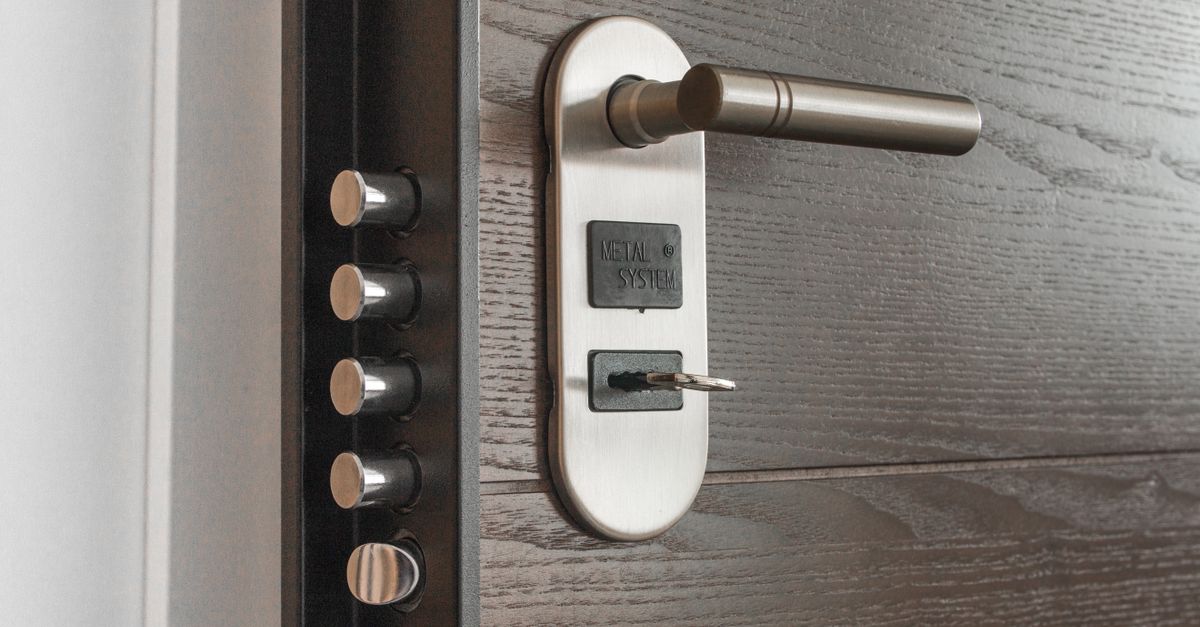
Many business owners assume rekeying is a job for tomorrow. In reality, storefront locks, office door knob locks, and heavy-duty mortise lock assemblies can all be rekeyed or repaired in a single mobile visit, often without removing the hardware from the door. Our technicians arrive fully equipped to assess the existing hardware, confirm an exact up-front price before touching anything, and complete the work with as little disruption to your business day as possible. Whether you manage a single retail unit or a multi-suite commercial property, understanding how commercial lock repair and rekey actually works — and what drives the cost — helps you make a confident, informed decision.
What we do
Available 24/7
Day, night, weekends and holidays — a real local locksmith answers and rolls a fully-stocked van.
Fast local response
Based in Greenville, we reach the Greenville area in well under an hour.
Insured & background-checked
Vetted technicians, up-front pricing, and no surprise add-ons when we arrive.
Damage-free entry
We pick and bypass locks the right way, so most lockouts are solved without drilling anything.
More about our work
Everything you need to know about how we help — at a glance.
What Sets Commercial Lock Repair & Rekey Apart from Residential Work
Commercial locksmith services operate in a different mechanical universe than residential work. A standard residential deadbolt is engineered for moderate daily use by a handful of people. Commercial hardware — particularly a mortise lock body recessed deep into a steel door stile — is designed for hundreds of cycles per day, ADA-compliant lever actuation, and often interconnected latch-and-deadbolt mechanisms that a single turn of the key must engage simultaneously. Repairing or rekeying a mortise lock requires disassembling the case, inspecting the cam, tailpiece, and spring cartridge for wear, then either re-pinning the cylinder to a new key cut or replacing worn components before reassembly. That is a fundamentally different skill set than changing a residential knob.
Storefront locks add another layer of complexity. Many Greenville retail and office properties use Adams Rite-style deadlatches or multi-point systems on aluminum-framed glass doors, where the strike geometry and keeper alignment are just as critical as the cylinder itself. Office interior door knob locks — the cylindrical knobs you'll find on private offices, server rooms, and supply closets — are simpler in profile but still require precise driver pin and key pin selection during a rekey to guarantee the old key cuts will never again actuate the plug. Our technicians carry a full range of pin kits, replacement cylinders, and mortise lock components on every vehicle, which is why the vast majority of commercial lock repair and rekey calls are resolved in a single visit.
Staff Turnover and the Commercial Lock Rekey Decision: A Practical Guide
The question business owners ask most often is: should I rekey or replace the entire lock? For most post-employee-departure scenarios, a commercial lock rekey is the appropriate and cost-effective answer — provided the lock body and cylinder are in sound working condition. Rekeying changes the internal pin configuration so that all previously issued keys become mechanically inoperable. The existing hardware, the door prep, the strike plate, and the finish all stay exactly as they are. Replacement only becomes necessary when the lock mechanism itself is damaged, worn beyond reliable operation, or when the business is upgrading to a higher security grade — for example, moving from a standard Grade 2 office knob to a Grade 1 mortise lock with an anti-pick, anti-drill cylinder.
There are, however, situations where the rekey conversation gets more complicated. If a departing employee had access to a key duplication machine — or if your current locks carry no-copy or restricted-keyway designations that were never enforced — rekeying alone may not provide adequate reassurance. In those cases, our technicians can advise on restricted keyway cylinders, which are proprietary key profiles that most hardware stores cannot duplicate without authorization. We can also add commercial lock installation of a new high-security cylinder into an existing mortise lock body, preserving your door hardware investment while substantially raising the bar on unauthorized key copying. If you are unsure which path is right for your Greenville property, call (704) 850-6756 — we answer 24/7 and can walk you through the options before you commit to anything.
Emergency Locksmith Response for Greenville Commercial Properties
Not every staff departure is amicable, and not every lock problem waits for business hours. An emergency commercial locksmith call might come at 11 PM when a manager discovers a lock has been tampered with, or at 6 AM when a retail owner arrives at a Kennett Pike storefront to find the deadlatch no longer retracts cleanly. Our mobile dispatch model means a technician is heading to you — not waiting for you to come to a shop. We serve Greenville, DE and surrounding New Castle County locations around the clock, and our vehicles are stocked to handle mortise lock repair, cylinder replacement, door knob lock service, and emergency board-up referral coordination if a door frame has been compromised.
Several factors influence how quickly a technician arrives and what the final service investment looks like: the time of day, the distance from our nearest available technician to your location, the complexity of the lock type, and whether replacement parts are needed from the vehicle stock or must be specially sourced. We confirm an exact up-front price before any work begins — no surprise totals when the job is done. What we never do is charge you for a quote or a diagnostic assessment that leads nowhere. Our goal on every emergency commercial locksmith call is to leave your door more secure than we found it, with documentation you can use for your own incident records if needed.
The Full Scope of Commercial Lock Services We Provide
Beyond the core rekey and repair scenarios, Reliable Wilmington Locksmith covers a wide range of commercial lock installation and maintenance needs for Greenville businesses. Our service list includes: mortise lock repair and cylinder replacement; mortise lock rekey to new or existing master key systems; storefront deadlatch repair and alignment; office door knob lock rekey and replacement; Grade 1 and Grade 2 commercial deadbolt installation; panic bar and exit device adjustment and repair; master key system design and implementation for multi-suite properties; restricted keyway cylinder upgrades; high-security cylinder installation into existing hardware; door closer adjustment to prevent latch wear; electric strike installation and troubleshooting; access control keypad integration with mechanical backup; cam lock replacement for file cabinets and utility panels; padlock rekey and hasp installation for storage areas; mailbox lock replacement for commercial mail rooms; safe lock service for office and retail safes; glass door lock repair for aluminum storefront frames; sliding door lock and pin installation; interior office suite lock replacement after tenant changeover; key control audits to document who holds which keys; duplicate key restriction enforcement for existing keyways; emergency lock-out response for commercial properties; door frame reinforcement plate installation to resist kick-in; lock lubrication and preventive maintenance service calls; and consultation on layered physical security for retail loss prevention. That breadth matters because security gaps rarely appear in just one place — our technicians are trained to spot adjacent vulnerabilities while resolving the primary call.
Locksmith Terminology, Specialisations, and How Regulation Shapes the Trade
Understanding a few key terms helps when you are speaking with any commercial locksmith about a repair or rekey. A mortise lock refers to a lock body that is mortised — cut — into a pocket inside the door edge, as opposed to a bored cylindrical lock that fits through a round hole. The plug is the rotating cylinder core that the key enters; the shell or housing surrounds it. Pin tumblers are the spring-loaded stacks of driver pins and key pins inside the plug; rekeying replaces or repositions the key pins so that only a new key cut can align them to the shear line and allow rotation. A master key system uses a secondary shear line so that a single master key can operate multiple locks while individual change keys each open only one. Knowing this vocabulary helps you ask precise questions and evaluate the answers you receive.
Locksmithing itself spans several distinct specialisations: automotive locksmiths focus on vehicle entry and transponder key programming; residential locksmiths handle home deadbolts, knobs, and smart locks; commercial locksmiths — the core of our Greenville business — work with the heavy-duty, high-cycle hardware found in offices, retail, and industrial settings; safe and vault technicians specialize in combination lock manipulation and electronic safe service; and institutional locksmiths serve hospitals, schools, and government facilities with complex master key hierarchies. Regulation of the trade varies significantly by geography. In the United Kingdom, locksmithing is currently unregulated at the national level, though industry bodies advocate for voluntary accreditation standards and trading standards authorities monitor consumer complaints. In the United States, the regulatory picture is a patchwork: some states — including Virginia and North Carolina — require locksmiths to hold a state-issued license, complete background checks, and carry proof of insurance, while other states impose no such requirements at all. Delaware, where Greenville is located, does not currently mandate a specific statewide locksmith license, but our technicians operate with full professional training, carry insurance, and adhere to industry best practices that meet or exceed what regulated states require. When evaluating any commercial locksmith service, always ask about insurance coverage, whether the technician can provide identification on arrival, and whether pricing is confirmed before work begins — those are the practical safeguards that matter regardless of which state's regulatory framework applies.
Frequently asked questions
How much is the average locksmith charge for a commercial rekey or repair?+
There is no single flat rate because several variables shape the final price: the type of lock involved (a standard door knob lock costs less to rekey than a multi-component mortise lock assembly), the number of cylinders being serviced, the time of day (after-hours and weekend calls involve a different rate structure), travel distance to your Greenville location, and whether replacement parts are needed from our vehicle stock. What we commit to on every call is a confirmed, exact up-front price before any work begins — so you know the total before we pick up a tool. Call (704) 850-6756 to describe your situation and get a clear answer.
How long does it usually take for a locksmith to come to a commercial property?+
Arrival time depends on where you are in the Greenville area, the time of day, and current call volume. For most locations in and around Greenville, DE — including businesses near Kennett Pike and the Greenville Commons corridor — our mobile technicians are typically on site well within an hour of your call. We operate 24/7, so there is no waiting until morning for an emergency commercial locksmith response. When you call, our dispatcher can give you a realistic estimated arrival window based on live technician availability.
Can a locksmith make a key from a lock, for example if all copies of a commercial key are lost?+
Yes — this is a standard service called key origination or key cutting by code. A trained technician can either disassemble the cylinder and read the pin stack heights to determine the correct key cuts, or, if the lock manufacturer's key code is recorded on the lock or in facility records, cut a new key directly from that code. For commercial properties with mortise lock systems or master key hierarchies, originating a new key also gives us the opportunity to audit the existing pin configuration and recommend whether a full rekey is advisable to invalidate any unknown copies that may still be circulating.
Should I tip my locksmith after a commercial service call?+
Tipping is entirely at your discretion and is never expected. Our technicians are compensated for their work through the service fee, and the quality of the job — arriving promptly, completing the mortise lock repair or rekey correctly, leaving the site clean, and explaining what was done — is part of every standard call. If a technician went above and beyond in a stressful emergency situation and you want to acknowledge that, a tip is always appreciated, but please never feel obligated.
Can a locksmith program my key fob or electronic access credential for a commercial property?+
This depends on the specific access control system installed at your property. For standalone electronic keypad locks and many commercial-grade smart lock systems, yes — our technicians can add, delete, or reprogram user credentials, including fob-based entry. Fully networked enterprise access control systems that run on proprietary server software may require coordination with the system's original installer or manufacturer for credential management at the software level, though we can still service the physical hardware components. When you call, describe the brand and model of your access system if you have it, and we can confirm the scope of what we can handle on a mobile visit.
What is the difference between a mortise lock and a cylindrical lock, and does it change the rekey process?+
A mortise lock is installed into a recessed pocket cut into the door edge and typically combines a latch, a deadbolt, and sometimes an anti-thumb-turn feature into a single case — common in older commercial buildings and higher-security applications throughout Greenville. A cylindrical lock fits through a round bore in the door face and is the more common format for interior office door knob locks and lighter-duty applications. Both can be rekeyed by changing the key pins inside the plug, but a mortise lock rekey generally requires removing and partially disassembling the lock body to access the cylinder, making it a more involved process that benefits from a technician experienced specifically with commercial hardware. The end result in both cases is that all previously issued keys are permanently rendered inoperable.