Reliable Wilmington Locksmith Service Team
Local locksmith team
Sep 7, 2026 10 min read
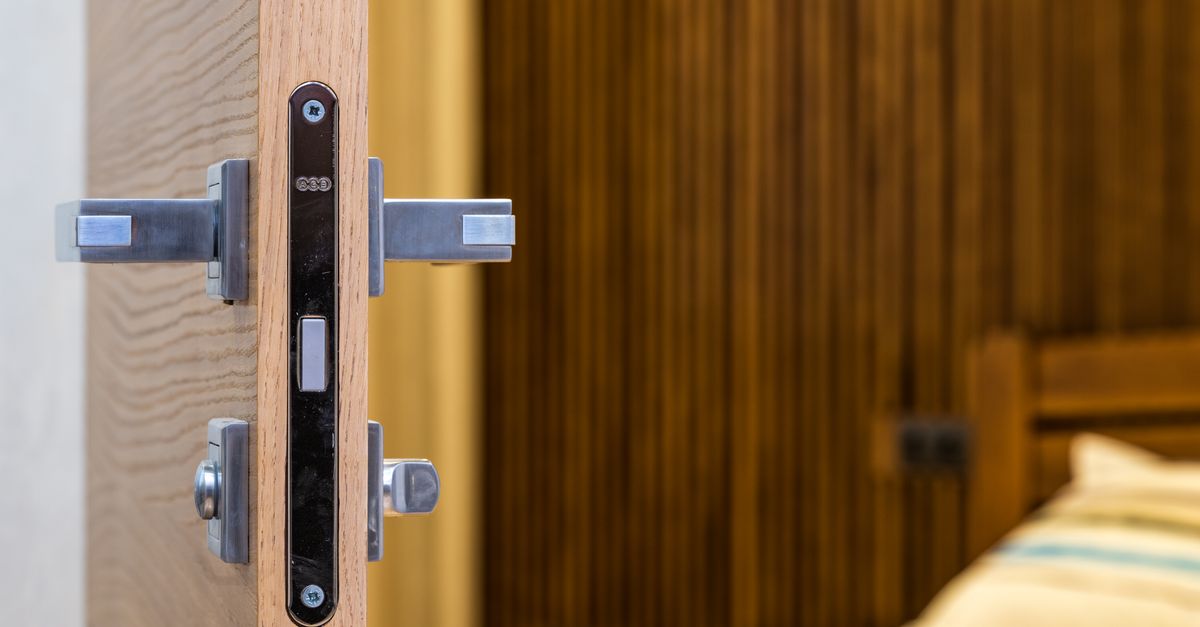
If you live in an older home along Kennett Pike or in one of Greenville's historic neighborhoods, there's a good chance your front door is secured by a mortise lock — a heavy, rectangular mechanism set deep into the door's edge rather than surface-mounted like a modern knob or deadbolt. These locks were the gold standard of residential security for most of the 20th century, and many of them are still doing their job decades later. But when one starts to stick, fail to latch, or simply won't turn reliably, you face a real decision: invest in a rebuild, or swap the whole unit out?
The answer isn't always obvious. Mortise hardware varies widely — from vintage Corbin Russwin and Baldwin mortise lock sets installed during original construction to more recent replacements — and the right call depends on the lock's condition, the door it lives in, and what level of security you actually need. This guide walks through the key factors so you can make a confident, informed decision before calling a locksmith.
## What Is a Mortise Lock — and Why It Matters for Historic Delaware Homes
A mortise lock is a self-contained unit — housing the latch, deadbolt, and sometimes a privacy function — that sits inside a precisely cut pocket (the 'mortise') carved into the door's edge. Unlike a cylindrical lockset that simply bores through the door face, a mortise lock set requires significantly more material removed from the door, which means the door itself is built around the hardware. In historic homes throughout northern Delaware, particularly those constructed between roughly 1900 and 1970, this was simply how doors were built. The hardware and the door are, in a very real sense, partners.
That partnership matters when you're deciding whether to repair or replace. Pulling out an original mortise lock set on an exterior door and retrofitting a modern cylindrical lockset often means filling the mortise pocket with wood, redrilling, and refinishing — work that can compromise a solid antique door and erase a significant part of its character. On the other hand, a mortise lock that's genuinely beyond saving is a security liability no amount of sentiment can justify. Understanding what 'worn' actually means mechanically is the first step.
## Reading the Signs: What 'Worn' Looks Like on a Mortise Lock
Mortise lock problems tend to fall into a few predictable categories. A stiff or grinding action usually points to dried-out or gummed-up internal lubrication — entirely normal after decades of use and very often fixable with a thorough cleaning and fresh lubricant applied to the case. A latch that doesn't spring back reliably suggests a fatigued latch spring, which is a small, inexpensive part that a skilled locksmith can swap in without replacing the entire case. Worn or loose key operation, where the key turns but doesn't consistently throw the bolt, typically points to the mortise lock cylinder or the internal cam that drives the bolt — again, components that can be replaced independently.
More serious warning signs include a case that has cracked or fractured (cast-iron cases can crack if the door has been forced), cam slots that are so worn the bolt no longer engages fully, or a strike plate alignment so far off that the door won't secure without lifting or shouldering it. If the door itself has shifted — common in Delaware homes where seasonal humidity causes significant wood movement — that misalignment problem lives in the door frame, not the lock, and no amount of hardware replacement will fix it on its own. A professional inspection separates these issues quickly.
## Repair Paths: When Rebuilding a Mortise Lock Set Makes Sense
Rebuilding is typically the right call when the lock case itself is structurally sound and the problem is isolated to worn or broken sub-components. The mortise lock cylinder — the plug the key actually enters — can be re-keyed or replaced entirely without disturbing the case. A skilled locksmith can source replacement cylinders for many older American-made locks, including Corbin Russwin mortise lock hardware and Baldwin mortise lock sets, both of which have long histories of quality manufacturing and enjoy reasonable parts availability even for older profiles. If your lock carries one of these names on the faceplate, it's worth asking about parts before assuming the whole unit is lost.
There's also a practical security upgrade hiding inside the rebuild option: swapping an old mortise lock cylinder for a high-security replacement cylinder (one with anti-pick, anti-drill, and restricted keyway features) while keeping the original case gives you modern security performance inside period-appropriate hardware. For homeowners on Owls Nest Road or in the Westover Hills area who want to preserve the look of original brass lever trim, this hybrid approach — new cylinder, original case, matching trim — is often the most satisfying outcome. If you're weighing this path and want a professional opinion on what parts your specific lock can accept, call (704) 850-6756. We're available around the clock and happy to talk through options before you commit to anything.
From a locksmith specializations standpoint, mortise lock work sits at the intersection of residential locksmith service and antique hardware restoration — a narrower skill set than standard lockout service. Not every technician has hands-on experience sourcing cams, following springs, and reassembling a case cleanly. When you call, it's worth asking specifically about mortise lock experience, because the terminology and the tooling are genuinely different from modern cylindrical work.
## Replacement Paths: When a New Mortise Lock Set for an Exterior Door Is the Better Answer
Sometimes the case is simply done. A cracked body, a cam slot worn to the point of no return, or a profile so obsolete that no replacement cylinder exists in the supply chain — these are situations where sourcing a like-for-like replacement mortise lock set for the exterior door is the smarter investment. The good news is that standard mortise pocket dimensions have been relatively consistent over the decades, so a quality modern mortise lock set will often drop into the existing pocket with minimal modification. The door keeps its integrity; the security gets updated.
This is also the moment to think honestly about your security goals. A modern mortise lock can accept a high-security cylinder from day one, offers tighter manufacturing tolerances, and may carry a smart mortise lock module if keyless entry or remote access matters to you. Smart mortise lock options have matured significantly — several manufacturers now offer motorized mortise bodies or cylinder-replacement smart cores that retrofit into a standard mortise pocket, meaning you can have app-based access or keypad entry without abandoning the mortise format entirely. For a rental property or a home where multiple people need access, that upgrade path is worth discussing with your locksmith. Pricing for any of this depends on the specific lock selected, the door's existing condition, any additional labor for fitting, and the time of service — we always confirm an exact up-front figure before any work begins.
In the United States, mortise locks are governed by ANSI/BHMA grading standards (Grade 1 through Grade 3), where Grade 1 represents the highest cycle-tested durability and is the standard typically specified for commercial and high-traffic residential applications. In the United Kingdom, mortise locks fall under BS 3621 — a British Standard that specifies minimum security requirements for insurance-approved locks, including bolt throw depth and pick resistance. While BS 3621 doesn't apply to Delaware homes, it's a useful benchmark for understanding what 'high security' actually means in measurable terms: a lock that can't be picked, drilled, or forced within a defined test protocol. When selecting a replacement, looking for ANSI Grade 1 or a lock whose manufacturer publishes independent test data puts you on solid ground regardless of which side of the Atlantic the engineering inspiration came from.
## Making the Call: A Practical Decision Framework for Greenville Homeowners
Here's a straightforward way to think through the decision. If the case is intact, the problem is a single failed component, and parts are available for your specific lock (Corbin Russwin and Baldwin mortise lock hardware are good bets; some off-brand or very old imports are not), repair is almost always worth attempting first. If the case is cracked or the lock is so worn that multiple components have failed simultaneously, replacement is likely more economical in the long run. If the door itself is a high-quality antique with original hardware that contributes to the home's value or character, lean toward repair and restoration over a full swap. If security is the primary driver — a ground-floor exterior door, a rental unit, or a home that's had a recent security concern — prioritize the security outcome over hardware preservation and choose accordingly.
A few questions a locksmith will typically ask during an on-site assessment: Can the door close and latch without force? Does the key turn the cylinder or is it the cam mechanism that's slipping? Is the strike plate mortised into the frame, and is it still properly aligned? Has the door been repainted or refitted recently in a way that might have changed its dimensions? Answers to these narrow the diagnosis quickly. For properties along Delaware Route 52 or anywhere in the Greenville area, our mobile team carries common mortise lock components and cylinder stock, so many repairs can be completed in a single visit. For a replacement mortise lock set on an exterior door where a specific finish or profile is needed, we'll confirm parts availability and lead time before scheduling.
Emergency locksmith situations — a broken key in the cylinder, a failed mechanism leaving you locked out — add urgency to the equation but don't change the underlying repair-vs-replace logic. What changes is timing: our technicians are available 24 hours a day, seven days a week, and can perform a field assessment even on an emergency call so you're not pressured into a full replacement when a cylinder swap would do the job. Call (704) 850-6756 any time — day or night — and we'll walk you through what we find before we touch anything.
Frequently asked questions
How much does a locksmith charge for mortise lock repair or replacement?+
The final cost depends on several factors: the specific lock model and whether parts need to be sourced, the condition of the door and frame, the time of day (emergency overnight calls factor into pricing differently than scheduled daytime visits), and travel distance to your location. We always confirm an exact up-front price before any work begins, so there are no surprises on the invoice. Call (704) 850-6756 for a straight answer based on your specific situation.
How long does it usually take for a locksmith to come out for a mortise lock issue?+
Response time depends on current demand, your location within the Greenville and greater Wilmington area, and whether it's a standard appointment or an emergency call. As a 24/7 mobile service, we prioritize lockout situations and aim to arrive as quickly as road conditions allow. When you call, we'll give you an honest estimated arrival window — not a vague promise — so you know what to expect.
Can a locksmith make a key from a lock — specifically an old mortise lock with no working key?+
Yes, in most cases. An experienced locksmith can decode the lock cylinder by disassembling it and reading the bitting (the pattern of cuts the key needs to match), then cut a new key to that specification. For very old or unusual mortise lock cylinders where the keyway profile is no longer in common production, the answer may be to re-key the cylinder with a current profile or replace the cylinder entirely — still a far less disruptive solution than replacing the whole lock case. This is a skill that requires genuine hands-on mortise lock experience, so it's worth confirming that the technician you're calling has worked with older hardware.
Should I tip my locksmith?+
Tipping is entirely at your discretion and never expected. If a technician goes above and beyond — staying late on an emergency call, talking through options patiently, or handling an unexpectedly complex mortise lock job with skill — a tip is a genuine gesture of appreciation that any technician will be grateful for. But it is never required or assumed, and the quality of service we provide doesn't change based on it.